An AI trading bot is almost always one of three things: an ordinary rules bot with “AI” in the name, a machine-learning system that searches past data for patterns, or a tool built on a chat assistant that reads text or writes code. None of the three can see the future. The US commodities regulator, the CFTC, said exactly that in a 2024 customer advisory titled “AI Won’t Turn Trading Bots into Money Machines”: “AI technology can’t predict the future or sudden market changes.” This guide explains what each kind really does, what evidence exists about profits, and how to judge any product with AI in its name, before your money is anywhere near it.
What is really being sold as an “AI trading bot”?
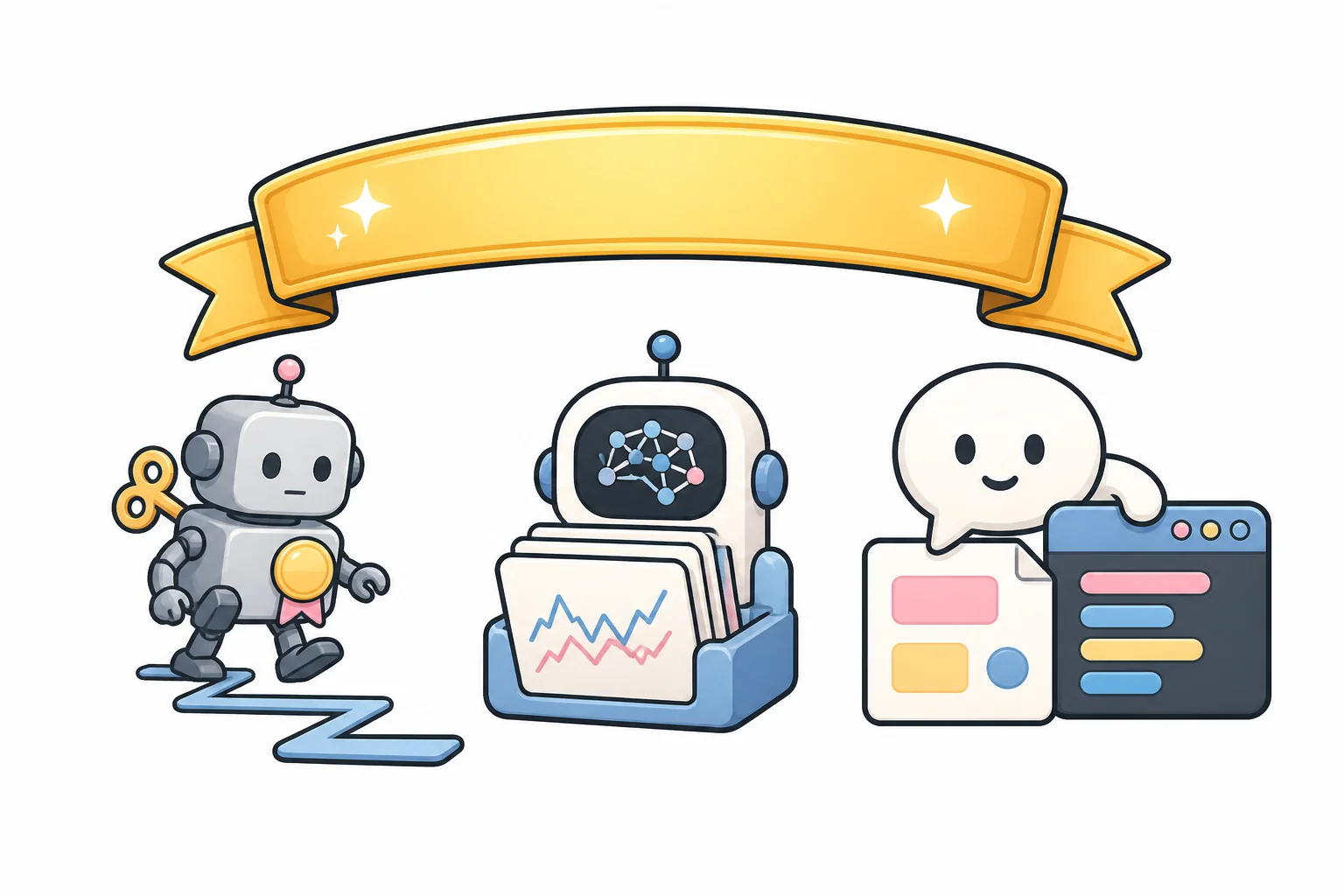
Three very different products wear the same label, so the first job is to work out which one is in front of you.
A rules bot with AI branding. Many retail “AI bots” are plain automation: buy when the price drops 2%, sell 1% higher, repeat. Rules like these can be useful, but nothing in them learns or thinks; the “AI” is marketing. The giveaway is the settings page: if you are asked to choose the same price levels, triggers, and percentages as an ordinary bot, it is an ordinary bot. The seven bot types a beginner meets, this one included, get their own guide in this series.
A genuine machine-learning system. Machine learning means a program that adjusts itself: you feed it years of market data, and it tunes thousands of internal numbers until its guesses fit that history as closely as possible. This is real technology; whether its guesses make money is a separate question, answered below.
A language-model tool. The newest kind is built on the same technology as chat assistants, a large language model: a program trained on enormous amounts of text. In trading it is used to read text, for example scoring a headline as good or bad news, or to write the code of a bot for you. It predicts likely words, not prices.
The rest of this guide treats the three separately, because “does it work” has a different answer for each.
How do AI trading bots work?
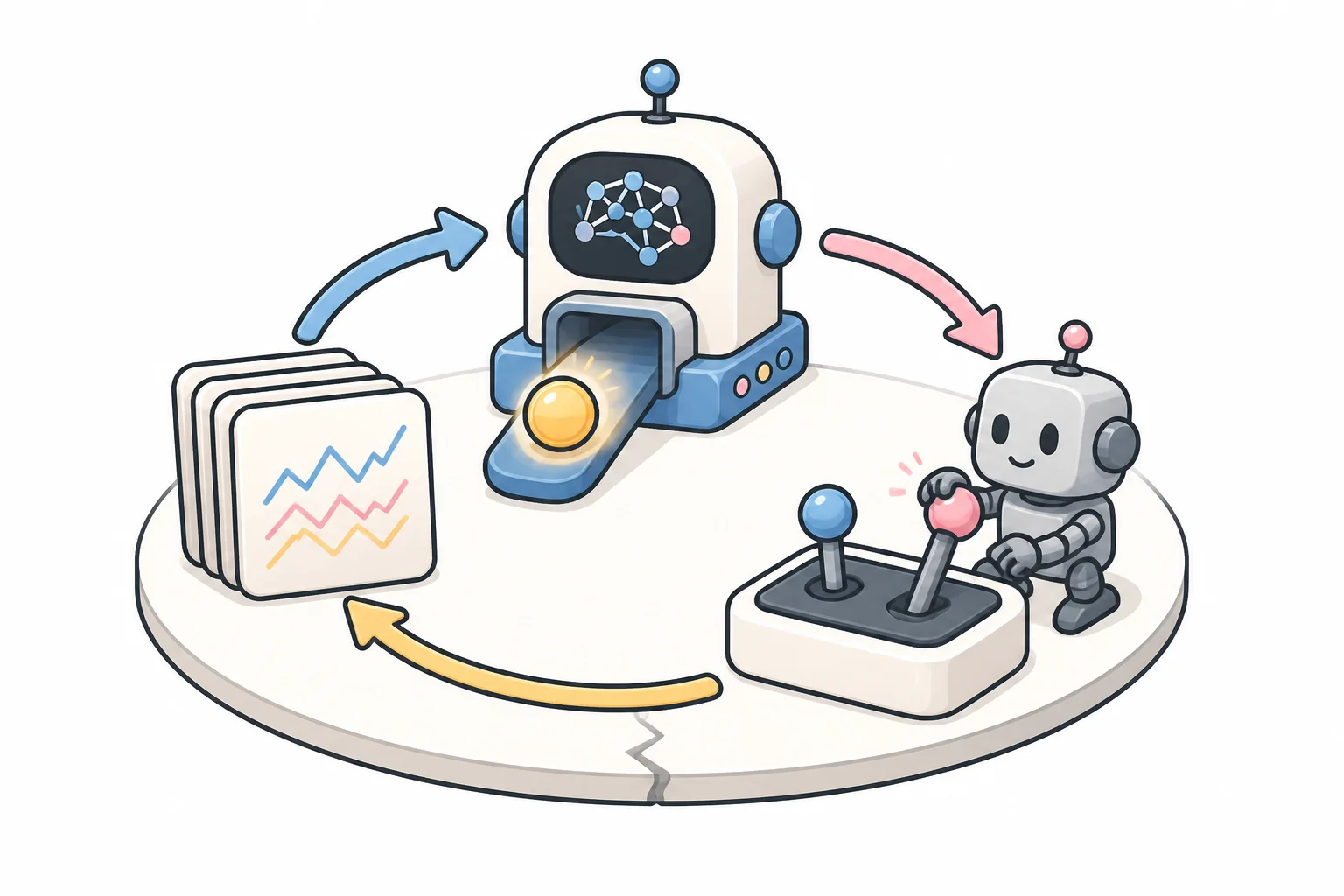
A machine-learning bot runs a loop with three steps. Training: the model is shown history, for example every hour of a coin’s price together with what happened the next hour, and adjusts itself until it fits the patterns in that record. Prediction: for each new hour it outputs a score, say 0.62, meaning it rates a rise somewhat more likely than a fall. Action: the bot buys above some threshold and sells below another. The whole loop rests on one assumption, that the future will resemble the training data. When the market changes, and crypto markets change often, the pattern the model memorized quietly stops applying, and nothing inside the model announces this.
A language-model bot replaces the price model with a reader. It takes in text such as headlines, company announcements, and social posts, and judges whether the news sounds good or bad for an asset, then trades that judgment. It handles language impressively well, but it has no way of knowing tomorrow’s news.
Two things do not change in any version. The bot still trades through the same exchange connection, pays the same fees, and suffers the same slippage as the plainest rules bot. And no amount of sophistication adds foresight: AI finds patterns in what already happened.
Do AI trading bots actually make money, and how accurate are they?

Start with what is missing: there is no independent scoreboard. Regulators publish no figures on how retail AI-bot users fare, and academic studies generally test models and data rather than the products sold to retail traders. Every accuracy or win-rate figure in an advertisement is the seller’s own unaudited number.
What careful research shows is narrower. In a working paper first posted in 2023, two finance researchers gave a large language model news headlines published after its training data ended and had it score each as good or bad for the company. The scores genuinely predicted returns over the following days, most strongly for small stocks and for bad news. The famous number from the paper, roughly a 90% hit rate, refers to the market’s immediate reaction, which the authors themselves call non-tradable: by the time anyone could act, that move had already happened. They also report that the strategy’s returns decline as more traders adopt the same models. Once every AI can see a pattern, trading on it stops paying, because the price already reflects it.
Accuracy would not settle the question anyway, because being right often is not the same as making money. A bot that wins 90 trades of $10 each and loses 10 trades of $100 each ends up 90% accurate and $100 poorer. That is why win rates are the favorite statistic of people selling bots; profit depends on the whole arithmetic of average win, average loss, and costs. Whether trading bots in general make money, and what realistic results look like, has its own honest guide in this series.
Are AI trading bots legal, legit, or a scam?
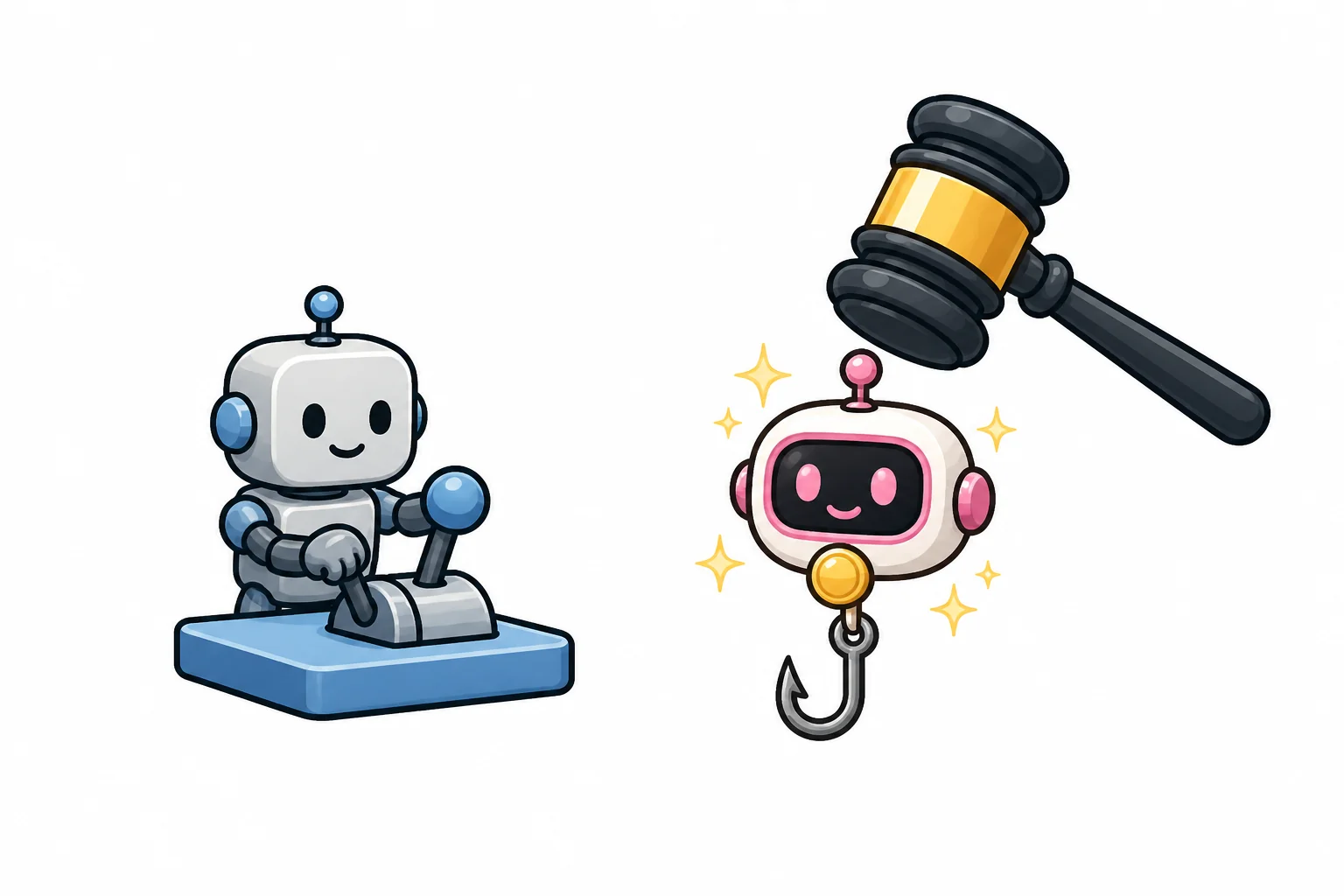
Legal, in most countries, yes: running a bot on your own exchange account is ordinary trading, whether or not AI made the decision, and exchanges publish interfaces for exactly that. Tax treatment and local rules differ by country, so that part is worth asking a professional about.
Legitimacy is a different question, and the label has earned the skepticism it gets. In 2024 the SEC charged two investment advisers over false statements about AI, a practice it calls “AI washing,” and the firms paid $400,000 in combined penalties. One had told clients its AI could “predict which companies and trends are about to make it big”; the SEC found it did not have the machine-learning capability it claimed. The SEC found that the other had falsely called itself the “first regulated AI financial advisor.” If even registered, regulated firms can be fined for empty AI claims, an anonymous website’s AI claim deserves no benefit of the doubt.
Outright fraud goes one step further: the AI story is invented to explain returns that do not exist. The SEC alleged in 2024 that the founder of an online crypto course took about $1.2 million from 15 of his own students for a hedge fund he said would trade with artificial intelligence and machine learning; according to the complaint, the fund was never launched, the technology never existed, and the students’ bitcoin was later stolen when the wallet holding it was hacked.
The largest of these cases shows how the trap works. Mirror Trading International sold access to a supposedly proprietary trading bot that guaranteed at least 10% a month, more than 200% a year, with buy-ins from $100 in bitcoin. Between 2018 and 2021 it took in at least 29,421 bitcoin, worth about $1.7 billion at the time, from at least 23,000 people in the US alone. Very little was ever traded; it was a Ponzi scheme, paying earlier investors with later investors’ deposits. A US court ordered $1.73 billion in restitution plus an equal penalty, the largest in any CFTC case, and the CFTC itself cautions that such orders may never return the money. The pitch said “bot” rather than “AI”; the scheme ran before the AI wave. The CFTC now uses the case as the centerpiece of its AI advisory, warning that today’s schemes sell the same promise with the label updated. That advisory describes current pitches claiming returns of “sometimes tens of thousands of percent” or 100 percent “win” rates, and a joint investor alert from SEC staff, NASAA, and FINRA quotes platforms advertising “Our proprietary AI trading system can’t lose!” Their shared rule is the one to memorize: a high guaranteed return with little or no risk is a classic warning sign of fraud, whatever technology the pitch names.
How much do AI trading bots cost, and is a free AI bot safe?

Paid bots are priced like software: a monthly subscription, a share of profits, or a one-time license. The number that matters is the cost measured against the size of your account. A $30-per-month bot costs $360 a year, which is 36% of a $1,000 account, so the bot must clear 36% a year before you have earned anything at all. This is why the CFTC’s advisory tells readers to count the impact of fees, spreads, and subscription costs before believing any promised return; on a small account, those costs are the main event.
“Free” needs one question answered first: how does the developer get paid? There are honest answers, such as open-source projects maintained in public, or bots built into exchanges and paid for by your ordinary trading fees. There are dishonest ones, where the free bot or free signal group is bait and the real product is your deposit on the seller’s platform. A free download from a stranger deserves extra suspicion for a mechanical reason too: it runs holding your exchange credentials, and if it is malicious it can leak them or trade against you. Free software from a known public project is normal; free profit from a stranger is the oldest lure in finance.
What is the best AI trading bot for a beginner?
This series names no products, and with AI bots there is a stronger reason than policy: there is nothing independent to rank them with. No public scoreboard of retail bot performance exists, and some of the sites ranking the “best AI bots” earn commissions from the bots they rank.
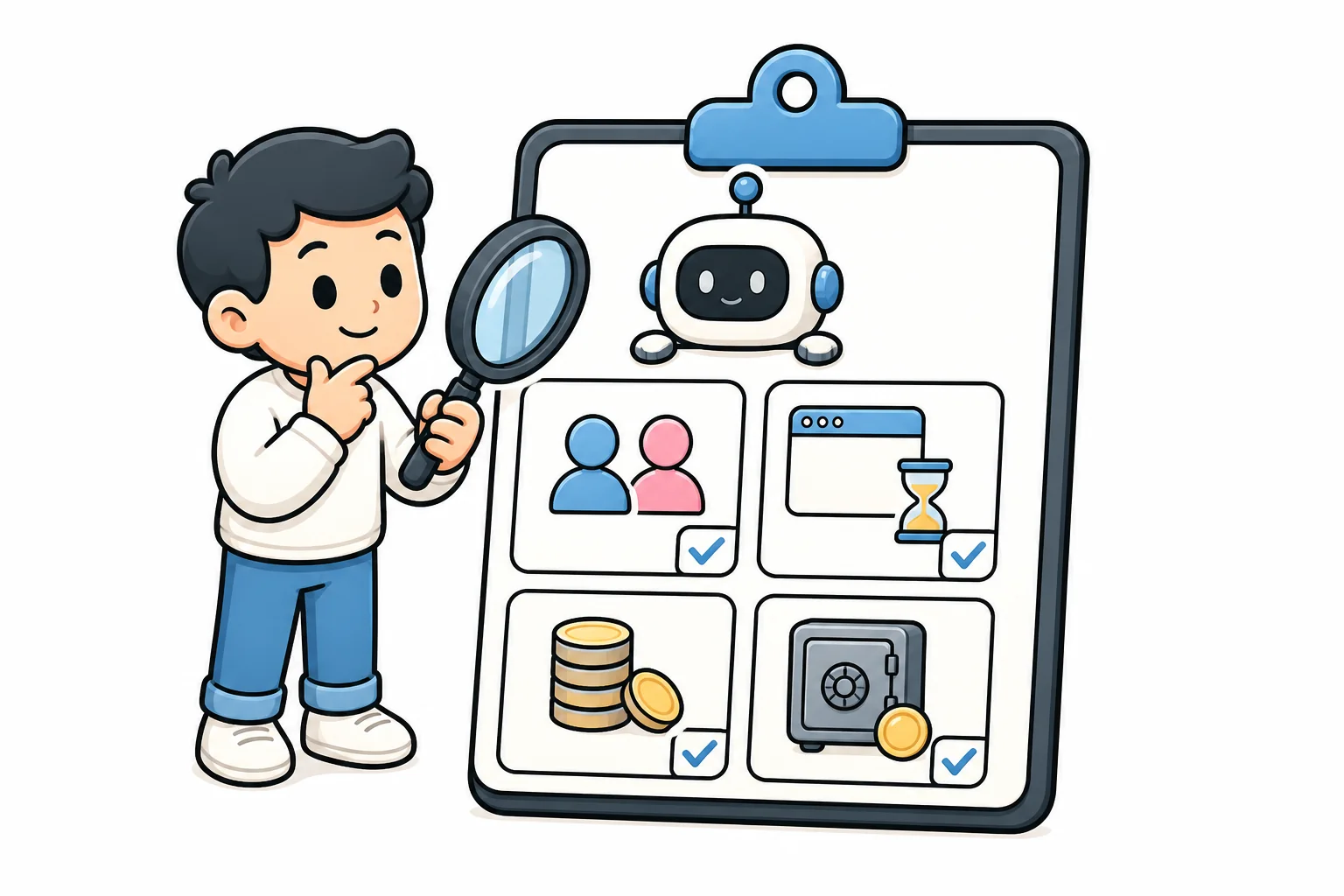
So judge any candidate yourself, starting with the checks the CFTC’s advisory lists. Research the company and the people behind it, and run a reverse image search on the team’s photos to verify they are who the site says they are. Check how old the website’s domain registration is; it is a public record, and a “veteran AI fund” on a three-month-old domain has answered your question. Get a second opinion from someone with no stake. Count the fee and subscription drag from the previous section. Then add three questions of your own. Can the seller say in one sentence where the profit comes from, and show when it loses? Does your money stay in your own exchange account, controlled by an API key? An API key is the credential that lets a program trade for you, and you can limit it and revoke it at any time. Is there a full track record that includes losing periods, rather than screenshots? A candidate that fails any of these is not the best AI bot for a beginner; it is one to walk away from.
Can an AI chatbot build and run a trading bot for you?
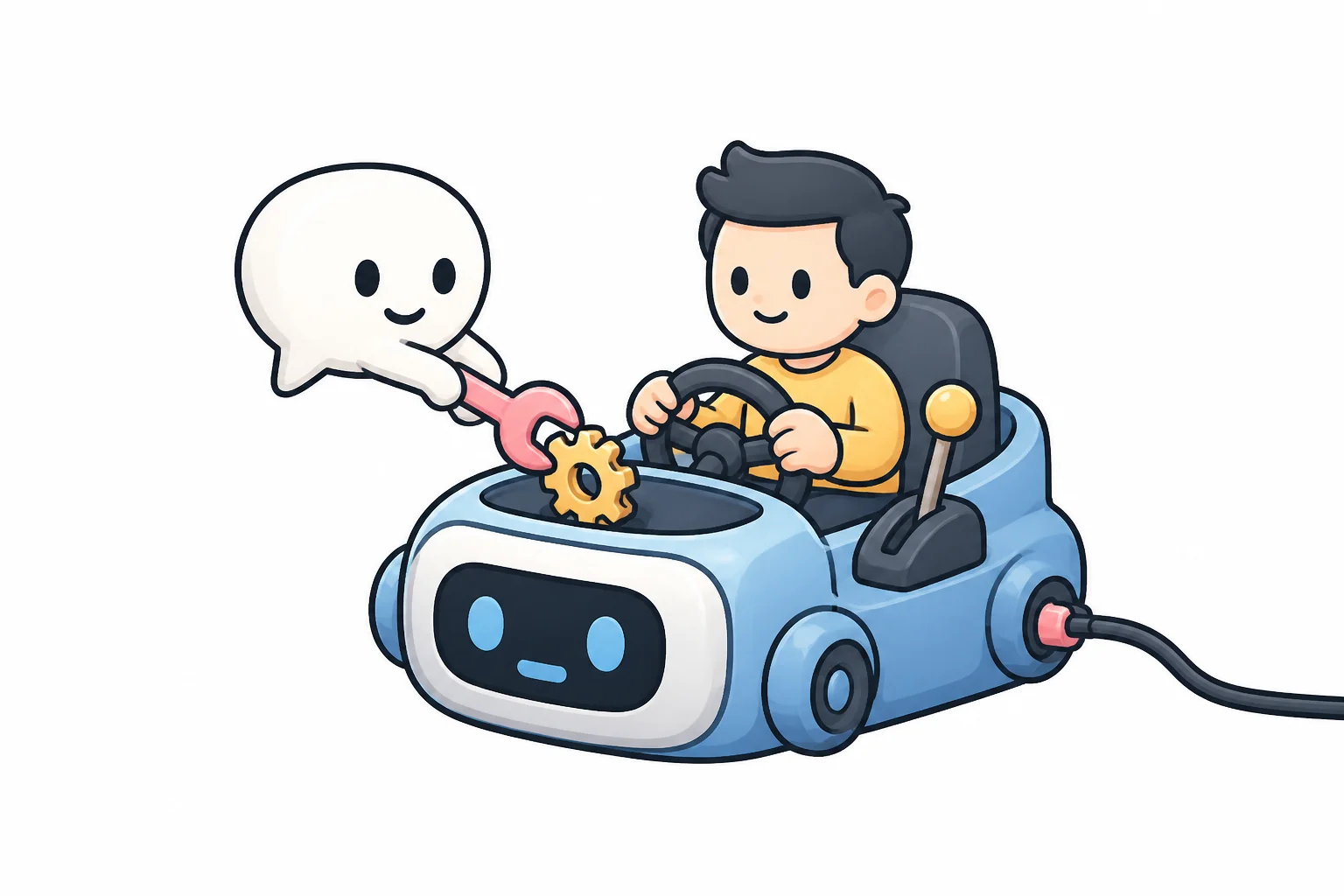
Build: yes, genuinely. A chat assistant can write working code for a simple rules bot, explain every line of it, and help you fix what breaks. This is the part of trading where AI clearly helps, and the honest list is deliberately boring: writing and reviewing code, explaining an unfamiliar exchange interface, summarizing research, drafting tests, reading error logs. All of these tasks surround the strategy rather than supplying one. The rule the bot trades is still your idea, and the assistant cannot tell you whether it has an edge.
Run: no. A live bot needs a machine that stays online, credentials, monitoring, and risk decisions only you can make. Assistant-written code can also be confidently wrong in quiet ways, an order size scaled ten times too large, a condition inverted, so everything it writes gets tested with fake money before it touches real money. The build guide in this series walks that path from zero.
FAQ
Do banks and big financial firms already trade with AI?
Large firms genuinely use AI, but mostly away from the trading decision. When the Bank of England and the UK Financial Conduct Authority surveyed 118 financial firms in 2024, 75% were already using AI and a further 10% planned to within three years, and the top uses were optimization of internal processes (41% of firms), cybersecurity (37%), and fraud detection (33%). The survey measured adoption, not trading profit, so it is evidence that AI is real infrastructure inside finance, not evidence that AI trading makes money.
Is it safe to connect an AI trading bot to my exchange account?
The connection itself can be tightly limited. A bot acts through an API key, a credential you create on the exchange, and you choose its permissions: allow trading, forbid withdrawals, and revoke it the moment anything looks wrong. A key that allows trading still lets a bad bot lose money by trading, so watch any new bot closely and start small. What no key can protect is money you sent to the bot seller's own platform, so the safety question to ask first is not about the AI but about where the money sits.
Will an AI trading bot get better the longer it runs?
Not by itself. A machine-learning model is a snapshot of the data it was trained on, and markets drift away from every snapshot, so an untouched model tends to get worse, not better. Retraining on fresh data can help, but each retraining is a fresh chance to memorize noise, which is why careful operators treat every retrained model as a new, unproven strategy that has to earn trust again with fake money first.